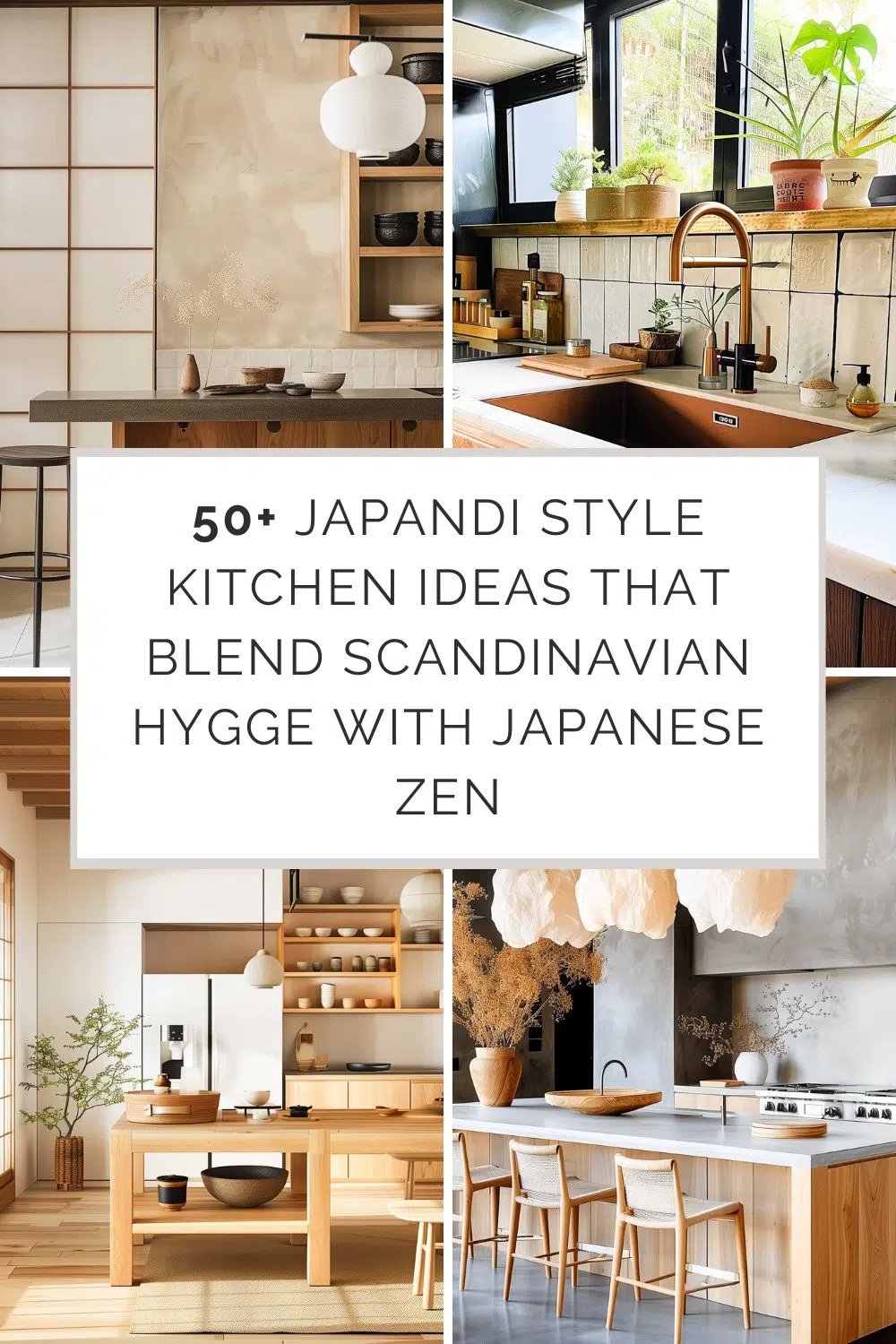
Imagine a space where clean lines and natural materials create a sense of calm, where functionality meets beauty in perfect harmony.
Picture yourself whipping up delicious meals surrounded by warm wood tones, sleek countertops, and minimalist decor that sparks joy instead of stress.
We're diving deep into the world of Japandi design, exploring the elements that make this aesthetic so unique and inviting.
Get ready to discover a treasure trove of inspiration, from minimalist cabinetry and open shelving to natural light and calming color palettes.
We'll even show you how to incorporate Japanese and Scandinavian design principles into your own kitchen, creating a space that's both stylish and functional.
So, grab a cup of matcha tea 🍵 and prepare to be inspired.


Japandi design is this wonderful blend of Japanese minimalism and Scandinavian functionality.
Think clean lines, natural materials, and a soothing, neutral palette. It's all about creating a space that calms the senses and makes daily tasks a joy.
As someone who spends waaay too much time in the kitchen (can you relate?), I'm always on the hunt for ways to make this hardworking room feel more serene and streamlined. Japandi style checks all the boxes!
So today, I'm excited to share some tips and ideas for bringing a little Japandi magic to the heart of your home. Get ready for all the cozy, minimalist vibes!
Embracing Minimalism
One of the key tenets of Japandi design is minimalism. We're talking clean lines, uncluttered surfaces, and a focus on the essentials.
I know, I know...the thought of parting with all your kitchen gadgets and gizmos can be scary!
But trust me, there's something so freeing about having only what you truly need and use.
Start by taking a good, hard look at what's currently in your kitchen.
Do you really need three different sets of measuring cups or that novelty egg slicer you got as gift? Probably not!
Be ruthless in your decluttering, keeping only the items that serve a purpose and bring you joy (shoutout to Marie Kondo!).
You'll be amazed at how much more peaceful and functional your kitchen feels when it's not crammed full of clutter.
Utilizing Natural Materials
Another hallmark of Japandi style is the use of natural materials like wood, bamboo, stone, and linen.
There's just something about these elements that creates a sense of warmth and connection to nature.
Try swapping out your old laminate countertops for a beautiful butcher block or stone slab.
Add some bamboo shelving or a rustic wooden table. Hang some linen curtains or display a few ceramic pieces.
These natural touches will instantly make your kitchen feel more inviting and serene.
Plus, they age so beautifully over time, developing that perfectly imperfect patina that Japandi style is known for.
Adopting a Neutral Color Palette
When it comes to color in a Japandi kitchen, less is definitely more! Think earthy tones and muted hues like white, beige, gray, and black.
This subtle, understated palette creates a calming atmosphere that's perfect for unwinding after a long day.
It also provides the perfect backdrop for showcasing those natural materials we talked about earlier.
If you're nervous about going too neutral, don't be!
You can always add in a few subtle pops of color with things like dish towels, plants, or artwork. Just keep it simple and cohesive.
One tip: Pay attention to the undertones in your neutrals. Stick with either warm or cool tones throughout the space for a more pulled-together look.
Mixing warms and cools can sometimes feel a little off.
Prioritizing Functional Design
As much as we all love a pretty kitchen, it's gotta function well too, right? That's where the Scandinavian influence comes in.
Japandi style is all about creating spaces that are as practical as they are beautiful.
Think thoughtful storage solutions like deep drawers for pots and pans, pull-out organizers for spices and oils, and hidden cupboards for small appliances.
The goal is to have a place for everything, so your counters can stay blissfully clutter-free.
When it comes to layout, opt for an efficient workspace that flows easily from one task to the next.
Maybe that means positioning your stove close to the sink for easy pot-filling and draining. Or adding a kitchen island with plenty of prep space.
The key is to really consider how you use your kitchen and design accordingly.
A little planning goes a long way in creating a space that's a joy to cook and entertain in!
Maximizing Natural Light
Is there anything more lovely than a sun-drenched kitchen? That bright, airy feeling does wonders for the soul, I'm telling you!
Japandi style is all about maximizing natural light to create a sense of openness and tranquility.
If you're lucky enough to have large windows, play them up with sheer or light-filtering curtains that let in plenty of sunshine.
No big windows? No problem! There are still plenty of ways to brighten things up. Try adding a skylight or solar tubes to funnel in light from above.
Or swap out heavy, dark cabinets for open shelving that lets light pass through.
You can also fake the look of natural light with some strategic bulb choices. Look for light fixtures with a warm, sunny glow, like LEDs in the 2700-3000K range.
Avoid anything too cool or bluish, which can feel stark and sterile.
Incorporating Plants and Greenery
Want to know one of the easiest ways to breathe life into your Japandi kitchen? Add some plants, baby!
There's just something about a little greenery that instantly makes a space feel more serene and organic.
Now, I know what you're thinking: "I have a black thumb! I kill everything I touch!" But fear not, my friend.
There are plenty of low-maintenance options out there that even the most horticulturally-challenged among us can handle.
Try a hardy snake plant or ZZ plant for a foolproof pop of green. Or add some trailing pothos to open shelving for a cascading, bohemian vibe.
Herbs like basil and mint are also great options that do double duty as kitchen staples.
Not only do plants add visual interest and a connection to nature, but they also purify the air and boost your mood. It's a win-win!
Celebrating Craftsmanship
One of the things I love most about Japandi style is its celebration of craftsmanship and artisanal touches.
There's just something so special about a handmade ceramic mug or a beautifully carved wooden spoon, don't you think?
Incorporating these one-of-a-kind pieces into your kitchen is a great way to add warmth and personality to the space.
Try displaying a few handcrafted bowls on open shelving, or adding a unique, hand-thrown vase to your countertop.
You can also celebrate craftsmanship through your choice of materials. Opt for things like hand-glazed tiles, natural stone, or hand-scraped wood floors.
These organic, imperfect elements add so much depth and character.
The key is to choose pieces that are both beautiful and functional.
Japandi style is all about finding joy in the everyday, so make sure your artisanal touches are things you'll actually use and appreciate on the daily.
Embracing Wabi-Sabi
Have you heard of the Japanese concept of wabi-sabi? It's all about finding beauty in imperfection and accepting the natural cycle of growth, decay, and regeneration.
In a Japandi kitchen, this means embracing the little flaws and quirks that come with age and use.
Think weathered wood, tarnished metals, and chipped ceramics.
These imperfections are seen as a sign of character and history, rather than something to be fixed or hidden away.
One way to incorporate wabi-sabi into your kitchen is through the use of vintage or antique pieces.
A weathered wooden stool, a patinated brass faucet, or a chipped enameled sink all add a sense of timelessness and charm.
You can also embrace wabi-sabi by opting for natural, organic shapes and textures.
Think hand-thrown pottery, knotted wood, and rumpled linen. These elements celebrate the beauty of imperfection and the hand of the maker.
Utilizing Open Shelving
One of the hallmarks of a Japandi kitchen is the use of open shelving.
Not only does it add visual interest and a sense of openness, but it also forces you to be intentional about what you display.
Instead of hiding away your dishes and glassware behind closed doors, try displaying a carefully curated selection on open shelves.
Stick to a cohesive color palette and mix in some artisanal pieces for added character.
Open shelving is also a great way to keep everyday items close at hand.
Store your most-used plates, bowls, and mugs within easy reach for quick grabbing and going.
Just remember: With open shelving, organization is key!
Keep things tidy and streamlined by editing your collection regularly and storing bulky or rarely-used items elsewhere.
A little bit of styling goes a long way in making your open shelves look chic and intentional.
Incorporating Statement Lighting
One of the easiest ways to add a little Japandi flair to your kitchen? Swap out your boring builder-grade light fixtures for something with a bit more personality!
Japandi style is all about mixing natural materials with clean, modern shapes. Look for fixtures that incorporate elements like bamboo, paper, or ceramics.
A sculptural pendant light or a minimalist sconce can instantly elevate the look of your space.
When choosing your lighting, think about the overall mood you want to create.
Soft, diffused light is great for a cozy, relaxing vibe, while brighter, more directional light is perfect for tasks like chopping and prepping.
And don't be afraid to mix and match!
A pair of pendants over an island, a sconce above the sink, and a flush mount in the pantry can all work together to create a layered, interesting look.
Creating Hidden Storage Solutions
Just because your kitchen is minimalist doesn't mean it can't be functional too!
The key is to get creative with your storage solutions.
One of my favorite Japandi-inspired tricks is to incorporate hidden storage wherever possible.
Think pull-out pantries, toe-kick drawers, and integrated appliances that blend seamlessly into the cabinetry.
You can also make use of vertical space with things like ceiling-mounted racks for pots and pans or magnetic knife strips for cutlery.
The goal is to keep your countertops and surfaces as clear and clutter-free as possible.
And don't forget about the insides of your cabinets and drawers!
Invest in some good-quality organizers like drawer dividers, spice racks, and lazy Susans to keep everything tidy and easy to find.
Selecting Low-Profile Furniture
When it comes to Japandi-style furniture, less is definitely more. Opt for pieces that are low to the ground and have clean, simple lines.
A low-slung dining table paired with some minimalist chairs or stools creates a sense of intimacy and relaxation.
Bonus points if they incorporate natural materials like wood or leather!
If you have an eat-in kitchen or breakfast nook, consider adding a built-in bench along one wall.
Not only does it provide extra seating, but it also creates a cozy, nestled-in feeling.
And don't forget about your bar stools! Look for options with slim, understated profiles and natural materials like rattan or wood.
Avoid anything too bulky or ornate, which can feel out of place in a Japandi space.
Adding Earthy Textures
One of the easiest ways to add warmth and character to a minimalist Japandi kitchen is through the use of earthy textures.
Think about incorporating things like rough-hewn linen, nubby wool, or raw cotton.
These natural fibers add a sense of depth and tactility that can soften the sharp lines of a modern space.
You can also play with contrast by mixing smooth and rough textures together.
Try pairing a sleek stone countertop with a woven jute rug, or a polished concrete floor with a rustic wooden stool.
And don't forget about the power of a good textile! A simple linen tea towel or a hand-thrown ceramic mug can add so much warmth and personality to your space.
Introducing Subtle Patterns
While Japandi style is definitely more minimalist than maximalist, that doesn't mean you can't play with pattern! The key is to keep things subtle and tonal.
One easy way to add some visual interest is through the use of textured tiles.
A matte black hexagon or a soft gray herringbone can add depth and movement without overwhelming the space.
You can also incorporate pattern through your textiles and accessories.
Look for things like tea towels with simple geometric prints, or pillows with tonal stripes or dots.
Just remember: A little goes a long way!
Stick to one or two subtle patterns max, and make sure they complement each other and the overall color palette of the space.
Designing an Open Floor Plan
If you really want to embrace the airy, spacious feel of Japandi style, consider opening up your kitchen to the rest of your living space.
An open floor plan not only makes your home feel bigger and brighter, but it also encourages a sense of flow and connectivity between different areas.
If you're starting from scratch, work with your architect or designer to create a layout that seamlessly blends your kitchen, dining, and living areas.
If you're working with an existing space, look for opportunities to remove non-load-bearing walls or widen doorways.
Just remember: With an open floor plan, your kitchen is always on display!
Make sure to keep things tidy and clutter-free, and invest in some good-looking storage solutions to keep everything organized.
Curating Minimalist Decor
When it comes to decor in a Japandi kitchen, the motto is definitely "quality over quantity."
Instead of filling your space with a bunch of random knick-knacks, focus on a few carefully-chosen pieces that really speak to you.
Look for things like handcrafted ceramics, simple sculptures, or framed artwork that incorporate natural elements or minimalist designs.
A single branch of cherry blossoms in a textured vase, or a trio of hand-thrown bowls on a shelf, can add so much beauty and personality to your space.
And don't forget about the power of negative space! Sometimes the most striking thing about a room is what's not there.
Don't be afraid to leave some empty space on your shelves or countertops – it can actually make your curated pieces feel more special and intentional.
When in doubt, just remember: Less is more! A few well-chosen, meaningful pieces will always trump a bunch of clutter and chaos.
Conclusion
Remember, it's not about perfection, but rather about creating a space that feels authentic, intentional, and brings you joy. Embrace the warmth of natural materials, the calm of a neutral palette, and the freedom of a clutter-free space.
Let your Japandi kitchen be a reflection of your unique style and a haven for culinary creativity.
Love these ideas? Pin your favorites to Pinterest and share this post with your friends on Facebook so they can get inspired too!


